


Superpower to Predict Falure: Why CAE simulation experts are today’s most wanted Engineers.
Once upon a time, veteran engineer was hired to repair a massive cargo ship with a failure engine that no one could repair. The engineer took out a small hammer and gently tapped a single, specific valve during inspecting the labyrinth of machinery. Instantly, the massive engine roared back to life. A few days later, the ship’s owner received a $10,000 invoice. The owner demanded a detailed bill by astonishing price for what seemed like simple work. The engineer’s reply was simple: “Tapping the valve with a hammer $2. Knowing exactly where to tap: $9,998”.
Today’s engineers’ true worth is not limited to the physical labour of building product, rather than in profound and predictive knowledge of understanding exactly how it will behave. Imagine if you have this typical capability to look into the future, where you can see exactly how a product will blend, where it will crack, or how it will overheat. Such capability has become a crucial asset in the design industry, especially where product reliability and performance are primary concerns.
In the AI era, Product Design Engineering (PDE), predictive capability is not science fiction. It is highly technical, immensely valuable skill supported by known system called Computer-Aided Engineering (CAE). Mastering CAE is like acquiring a digital superpower for today’s tech-savvy. The engineers with superiority in predicting failure by utilizing the CAE are the ultimate talent in saving millions of dollars investment. Economically, this is where the ultimate role of Product Design Engineer.
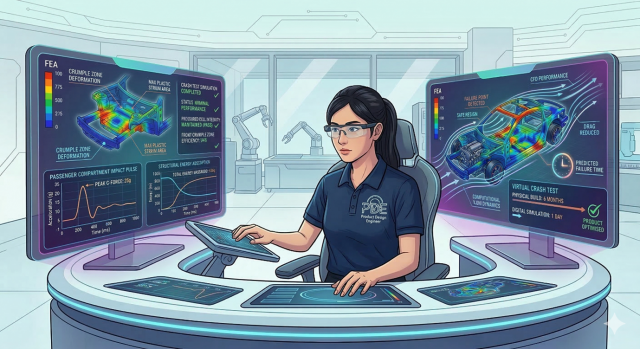 Figure 1. CAE in Product Design Engineering Supported by Gemini AI
Product Cycle Problem: Build-Break-Repeat
Manufacturing in the traditional approach is heavily relied on physical trial and error. The automotive industry need to build the prototype car and crash it to the wall to know if a new car chassis was safe. This experiment allowed them to analyze the wreckage, and start over the design. This method incredibly expensive, time-consumeng, and of course environmentally wasteful. The digital tools open the opportunity for product design engineer to simulate real-world conditions in a virtual environment through the advanced mathematical models and physics-based software. This modern method allow engineers to identified the automotive design flaw effectively before it is made.
 Figure 2. FEA and CFD Supported by Gemini AI
Digital Revolution Role: FEA and CFD
This is where the CAE changes the game. Engineers can simulate real-world conditions in a virtual environment through advanced science model, proving that the integration of mathematical models and physics-based software is the true foundation of modern engineering. There are two aspects of simulation can be used in predicting the failure, Finite Element Analysis (FEA) and Computer Fluid Dynamics (CFD).
With FEA, engineers can simulate structural loads, vibrations, and impacts to predict exactly how a product will react to physical forces. This virtual testing significantly cuts down on prototyping time and manufacturing costs while ensuring a complete understanding of the component's structural integrity.
On the other hand, CFD deals with flow of liquids, gases, and analysis of heat transfer. Product Design Engineer uses CFD to optimize the aerodynamics of variety of product that run within interaction with wind, for example simulation of high-speed electric vehicle to save battery life, or designing internal cooling systems for high-performance laptop to prevent overheat.
On the other hand, CFD focuses on fluid mechanics, specifically analyzing the flow of liquids and gases alongside heat transfer. A Product Design Engineer leverages CFD to optimize the aerodynamic and thermal properties of various products. Applications range from simulating high-speed electric vehicles to reduce drag and preserve battery life, to engineering internal cooling systems that prevent thermal throttling in high-performance laptops.
Why Simulation Experts is Niche Competency
The ability to operate software and run these simulations translates directly into valuable benefits. An engineer who equipped with CAE skills contributes at least three distinct advantages for the company: Cost reduction, material efficiency, and speed to market.
- Cost Reduction. The industry can eliminate the need for multiple physical prototypes saves immense capital.
- Material efficiency, the company can reduce waste and contributing to greener supply chain through the accurate estimation of material required to make strong and lightweight component.
- Speed to Market. Typical virtual testing takes days which affecting faster time to deliver product to market.
Industries are no longer just looking for designers who can draw beautiful concepts; however, they are hunting for design engineers. Design engineers are those who able to understand aesthetics but also mathematically validate their designs using measurable parameters as such simulations using CAE. Much like the engineer with the hammer, they are paying for the expertise to know exactly where a product will fail, long before it actually does.
Mastering the CAE at BINUS ASO
In Product Design Engineering Program in BINUS ASO, we treat simulation as the DNA of our curriculum beyond afterthought. Our students are trained to create design that only successful if it survives the rigors of the real world. They learn to identify flaws, iterate rapidly, and optimize designs with precision to achieve sense of “superpower” using the access to industrial standard software and high performance computing. They are not just holding the engineering degree by the time they graduate, but they are problem solvers who have sense of failure prediction following with failure prevention, then, design the flawless products of tomorrow.

Comments :