



Humanizing Design Engineering: From Ergonomic to UI/UX
In the middle of your scrolling time, have you ever sat in an office chair for hours without feeling sore? Or, have you ever feels extremely frustrated using a smartphone app because the buttons were too hard to find? Two human emotions comfort and frustration are not coincidences. Both are the effect of long series of design decisions. The designer create variety version of designs starts from alpha version and continuously develop until user feels happy to use the apps. This is the essence of Human-Centred Design, an design approach that consider mainly humans strengths and limitation for the product innovation.
Ergonomics: When product form adapt to human body
Rigid shapes of product design are often used in product design. We can see how the body shape of automobiles evolutes from the past until present (Figure 1) . Currently, Product Design Engineering Paradigm has completely reversed.
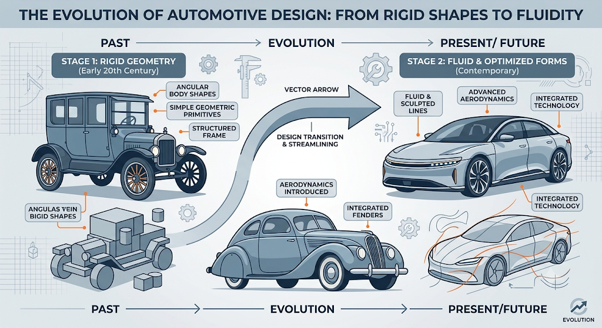
Figure 1. The evolution of automobile shapes
Design of everyday tools
The fluid optimized forms also influenced many product designs such as power drill handle or even a modern toothbrush. The utilization of rubberized material with contoured waves on the handle are precisely designed to minimize pressure on the muscles of the palm and prevent the tool from slipping during the repeated use (Figure 2). However, in the rapid development of information technology in term of IoT even Artificial Intelligence, human-machine interactions are no longer limited to mechanical objects or furniture. User mostly interact with screens, smart sensors, and software. This is the essence of Human-Computer Interaction (HCI) and UI/UX (User Interface/User Experience) advancing the physical ergonomics to cognitive ergonomics.
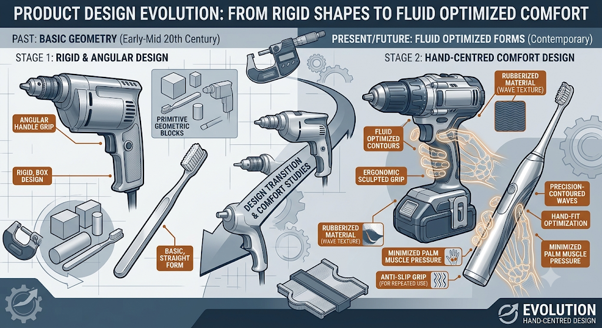
Figure 2. Design of power drill handle and toothbrush: From rigid design to hand-centred comfort design.
Design of EV Dashboard
The interaction between the driver and touchscreen based dashboard should be designed by considering the avoidance of breaking concentration. High-contrast colour options, easily recognized icons at a glance, and instant touch responses are designed to guarantee drivers concentration to keep drivers safe on the road without having to think hard to turn change the AC temperatures or turn on car radio (Figure 3).

Figure 3. Contrast colour options and easily recognized icon in EV Dashboard.
Holistically approach in Product Design Engineering
In this integrated era, a product design rarely stands alone as just a physical object or merely a digital software. A smartwatch requires material comfort on the wrist (ergonomics) as well as ease of information navigation on a very small screen (UI/UX). Product Design Engineering program at BINUS ASO School of Engineering realize that the philosophy of Monozukuri is deeply applied to nurture this sensitivity. The graduates are encouraged to have high empathy for societal conditions. This empathy feelings lead the engineers for creating functional products only but design holistic solutions that truly humanize people.
Good engineering design ultimately feels “invisible” – it works in such harmony with our bodies and mindsets that we can only feel its ease.

Comments :