


Revisiting Product Design Skills via Product Design Engineering Perspective
Why is the smartphone design really comfortable to hold? Why is a particular working chair very convenient to sit in? These questions actually expose the importance of Product Design in providing interesting products. In this case, product designers need to cover the broad spectrum of customer requirements, ranging from emotional appeal to technical reliability. Cross disciplinary approaches is required to satisfy those customer needs, beyond art and design.
The emerging industrial landscape demands the product experience rather than “looks and feel”. Product designers need to creates functional, durable and manufacturable product, therefore, we must revisit and upscale the design skills through the lens of Product Design Engineering perspective.
Beyond Aesthetics: The Engineering Logic
Generally, the society view the product design only based on artistic endeavour – sketches, colours, and clay models. This endeavour easily captured by the consumer’s eye and become one of the criteria in selecting product. On the other hand, engineering endeavour – science, technology, captures the consumer trust through product functional and reliability.
Therefore, the questions must immediately ask "Is this shape structurally sound?"; "Can this shape be manufactured efficiently?"; “What kind of materials need to adopt to accommodate based on the Product Design Engineering approach rather than limited question such as "Is this shape beautiful?".
For example, when designing a wearable smart glass (Figure 1), a pure designer might only limited to focus on the silhouette of form and colour. A Product Design Engineer, however, will use anthropometric data to ensure the head curves fit the human percentile, apply stress analysis to ensure the material won't deformable when the smart glass drop from specific high, and select the right polymer composites to balance cost and durability. This integration creates a product that works as beautifully as it looks.
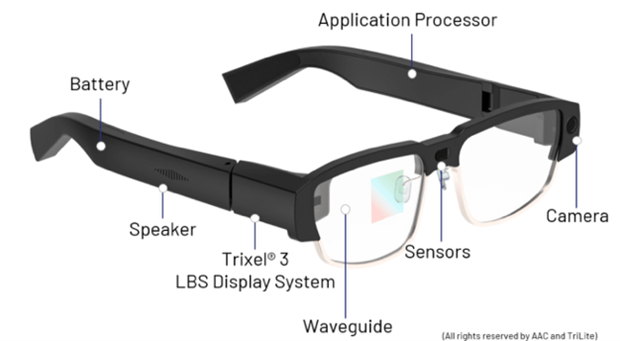
Figure 1. Example of Smart Eye Glass
Source: Trilite, 2024
The "Bilingual" Professional
The industry today faces a common bottleneck in term of product design and development, the gap between the "Creative Team" and the "Engineering Team." Designers often propose concepts that are impossible to manufacture, while engineers might build functional products that lack user appeal. Body
Product Design Engineering bridges this gap. At BINUS ASO School of Engineering, we train students to be bilingual. They speak the language of aesthetics and fluent in engineering language. The aesthetic language involves the understanding of proportion, semantics, and user experience (UX) while the engineering language covers mastering physics, mechanics, and material science.
Leveraging Technology: From Sketch to Simulation
Adapt with the skills of Society 5.0 era means embracing advanced technology beyond adopting IoT. Traditional design process using manual sketching, drafting and modelling no longer compatible to pursue the dynamics of design trend. A modern Product Design Engineer utilizes digital transformation to simulate real-world conditions, such as Computer Aided Design (CAD) and Computer-Aided Engineering (CAE) as describe in Figure 2.
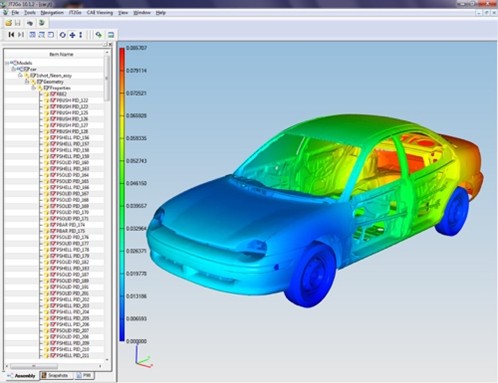
Figure 2 CAD and CAE
Source: Engineering.com (2015)
The simulation is important to estimate the material and dimension of the product. We can simulate how a smartphone casing reacts to being dropped or how heat dissipates in a laptop. This virtual prototyping capability reduces waste while speeds up time-to-market. This way of thinking represents the core of the Monozukuri spirit (the Japanese art of making things) that we uphold, meticulous attention to detail from the very start.
Conclusion: Designing for the Real World
Ultimately, revisiting product design skills via an engineering perspective is beyond responsibility. It is about taking ownership of the entire product lifecycle and transforms a drawing into a solution.
Product Design Engineering is not just about making things look good; it is about making things work, making them last, and making them matter.
Reference
Trilite (2024). Seeing Beyond Reality: What Are the Key Requirements That Define AR Smart Glasses’ Success?. URL: https://www.trilite-tech.com/seeing-beyond-reality-what-are-the-key-requirements-that-define-ar-smart-glasses-success/. Accessed: 21 January 2026.
Engineering.com (2015). How Do I Integrate Simulations from Various CAE Packages into PLM? URL: https://www.engineering.com/how-do-i-integrate-simulations-from-various-cae-packages-into-plm/. Accessed: 21 January 2026

Comments :