

Turning Data into Business Insights: My Internship Journey at TikTok
Discovering the Connection Between Business, Technology, and People
‘I entered this experience wanting to understand how businesses work, but I leave with a much broader perspective. Along the way, I came to appreciate not only the data, systems, and processes that keep a business running, but also the people behind them. It is this understanding, above all, that I hope to carry with me as I take my next steps beyond the classroom.’
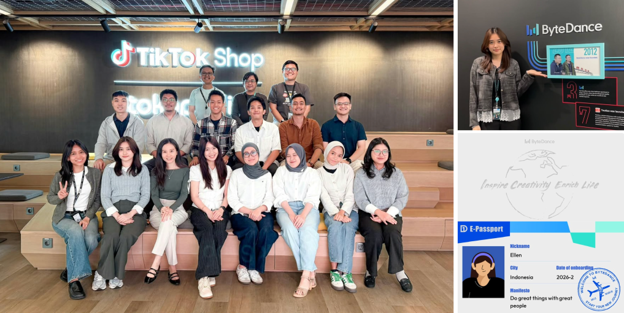
Starting an internship was something I had always looked forward to. I saw it as an opportunity to understand how businesses operate beyond what we learn in university, experience a professional working environment, and discover how the knowledge I gained as a Business Engineering student could be applied in practice.
When I joined TikTok through the BINUS ASO School of Engineering 3+1 Internship Program, I became part of the Global Business Solutions (GBS) team. As a Brand Partnerships Project Intern, I supported various business operations, client onboarding activities, data analysis, and performance monitoring initiatives.
What initially began as an opportunity to gain professional experience gradually became something much more meaningful. Throughout this journey, I gained a better understanding of how different business functions work together, how data supports commercial decisions, and how even small improvements in daily processes can contribute to a team's overall efficiency.
Discovering the Business Behind TikTok
Most people recognize TikTok as a social media platform for entertainment, trends, and content creation. However, my internship allowed me to explore another side of the company: its digital advertising business.
Within Global Business Solutions (GBS), the team works closely with businesses and advertisers to help them utilize TikTok's advertising solutions to achieve their marketing objectives. This involves understanding client needs, supporting business development activities, monitoring advertising performance, and maintaining relationships with business partners.
Being part of this environment helped me understand that digital advertising involves much more than simply creating advertisements. Behind every campaign are business strategies, client relationships, performance evaluations, and operational processes that work together to ensure everything runs smoothly.
I also became more familiar with TikTok's advertising products, and the different marketing objectives businesses can achieve through the platform. This gave me a broader perspective on how technology, marketing, and business development come together within the digital advertising industry.
Applying Business Engineering Knowledge to Real Business Operations
My academic background in Business Engineering has given me a foundation in understanding how organizations operate, analyzing business data, managing projects, and approaching problems systematically. During my internship, I began to see how these concepts translated into actual business activities.
One of my responsibilities involved collecting, organizing, and analyzing business data to support the team's commercial activities. I helped maintain sales records, manage reporting trackers, and prepare information used during weekly meetings and business reviews.
Beyond these operational tasks, I also had opportunities to participate in ideation sessions, understand business requirements, and support the development of client strategies. These experiences showed me that business decisions rarely happen in isolation. They involve coordination between different teams, reliable information, and a clear understanding of the objectives everyone is working towards.
I also had the opportunity to shadow account managers during client meetings and calls. Observing these interactions gave me insight into how professionals communicate with clients, understand their needs, discuss campaign performance, and maintain long-term business relationships.
This experience helped me see that successful business development is not only about identifying opportunities. It also requires understanding people, building trust, and ensuring that the solutions offered genuinely support the client's objectives.
Turning Data into Insights Through Dashboard Development
Working with data also introduced me to one of my key projects: developing and maintaining Daily Monitoring Dashboards to support the team's performance monitoring.
The dashboards provided a more organized overview of business and campaign performance, allowing the team to monitor progress, identify trends, and better understand the performance of client accounts.
Throughout this project, I had the opportunity to work with internal business intelligence tools and explore how data could be transformed into meaningful visualizations. I learned to organize information, identify relevant performance indicators, and present data in a way that was easier for others to understand and use.
More importantly, this experience changed the way I viewed data analytics. I realized that its value goes beyond presenting numbers or creating charts. What matters is how information can be translated into insights that help people recognize patterns, evaluate performance, and make more informed business decisions.
Exploring Automation and AI
While working with data helped me understand business performance, I also became interested in how technology could improve the processes behind daily operations.
During my internship, I was exposed to repetitive activities that required a considerably amount of time when handled manually. This encouraged me to explore automation as a way to simplify workflows and improve operational efficiency.
I had the opportunity to work with tools such as Python, Lark Sheets, and internal automation tools to develop solutions that supported these improvements. I was also introduced to AI bots, where I learned more about how to create, train, and refine them for specific tasks.
Since I did not have extensive experience in automation and AI development beforehand, much of this process involved learning through experimentation. I first had to understand the existing workflow and identify what needed to be improved. From there, I explored different approaches, tested their results, and made adjustments when something did not work as expected.
Working with AI bots also introduced me to a different way of problem-solving. I learned that creating a useful bot involves more than simply giving it instructions. It requires understanding the task it is expected to perform, providing relevant information, structuring clear instructions, and continuously refining its responses as well as results to make it more useful.
These experiences made me more comfortable working with unfamiliar technologies and taught me to approach problems with a more solution-oriented mindset. I began to see automation and AI not just as technical tools, but as practical ways to reduce repetitive work, improve productivity, and give people more time to focus on tasks that require analysis, creativity, and decision-making.
Adapting to a Fast-Paced Professional Environment
Beyond the projects and technical skills, one of the biggest learning experiences was adjusting to the transition from university life to a professional working environment.
At university, assignments and projects are generally structured around academic requirements and deadlines. In a company, however, responsibilities are often interconnected, and the completion of one task can affect someone else's ability to move forward with theirs.
This made me more mindful of my responsibilities and the impact of my contributions. I became more conscious of deadlines, the accuracy of the information I provided, and the importance of communicating progress clearly. I also began to understand how important multitasking is in a professional environment, especially when working in a fast-paced team. There were many occasions when I received multiple tasks at the same time, each requiring attention and often needing to be completed as soon as possible. These situations taught me how to manage competing priorities, organize my workload, and switch between tasks efficiently while maintaining accuracy. More importantly, I learned to stay focused and work under pressure, even when handling several responsibilities at once.
Alongside managing multiple tasks, I also realized that working in a professional environment requires more than simply completing assigned responsibilities. Communication, initiative, adaptability, and accountability are equally important. There were times when I had to learn unfamiliar tools, understand new processes, or figure out how to approach a task with limited prior experience. Gradually, I became more comfortable asking questions, seeking feedback, and taking the initiative to learn independently.
Another valuable part of this transition was learning to collaborate with colleagues who brought different perspectives, responsibilities, and professional experiences to the team. Through daily interactions, discussions, and collaboration with colleagues, I gained a better understanding of how different roles contribute to a team's overall objectives.
Ultimately, I learned that completing a task is only one part of being responsible at work. It is equally important to understand how each task connects to the next step, who depends on its completion, and how it contributes to the team's overall progress. This broader perspective changed the way I approached even the smallest responsibilities.
The People Behind the Experience
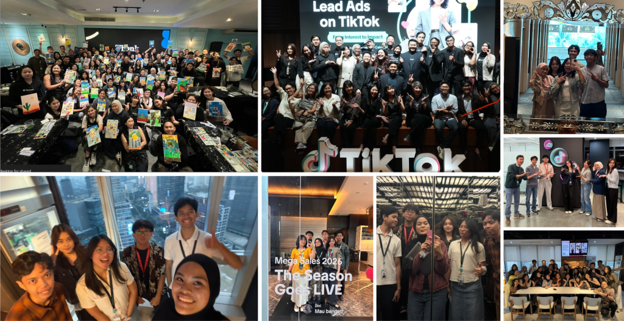
Beyond my daily responsibilities, the relationships I built with people throughout the internship became an equally meaningful part of the experience.
Being part of the Global Business Solutions team allowed me to interact with account managers, team leads, and colleagues from different functions and across different countries. Their guidance helped me navigate unfamiliar processes, work through challenges, and become more confident in handling my responsibilities.
I appreciated the opportunities to participate in team discussions, weekly meetings, client-related activities, and other business initiatives. Beyond learning how the work was done, these interactions allowed me to observe how professionals approach different situations, exchange ideas, and communicate across teams.
I also had the opportunity to work alongside fellow interns. Although we had different responsibilities, sharing experiences and learning from one another made the journey even more enjoyable.
Having colleagues who were willing to share their knowledge and provide guidance made a significant difference, especially during the early stages when almost everything was new to me. These interactions reminded me that professional growth does not happen independently. It is also shaped by the people we learn from and the environment we become part of.
What This Internship Has Taught Me
Looking back, I realize that I gained much more than technical experience from my time at TikTok. I developed a better understanding of how business, technology, data, and people come together in a real working environment.
Data analytics is not just about interpreting numbers.
Project management is not just about organizing tasks.
Process optimization is not just about making workflows shorter.
In practice, all these areas work together to address business needs and create meaningful outcomes.
Throughout the internship, I began to see how closely different business functions depend on one another. An observation from the data could lead to a closer examination of an existing workflow, while improving that workflow often required input and cooperation from the people involved. Seeing these connections helped me understand that business improvements rarely happen through one function or individual alone.
I initially joined TikTok wanting to gain professional experience and understand how the digital advertising industry operates. Along the way, I found opportunities to develop technical skills, contribute to actual business activities, explore unfamiliar technologies, and learn from people with different areas of expertise.
One of the most rewarding parts of this experience was seeing how the things I worked on connected to the team's daily activities. It gave me a different perspective on even the smaller tasks I handled. A dashboard, a tracker, or an improved workflow might seem like just one part of a much larger operation, but each serves a purpose for the people who rely on it.
I also learned that professional growth is not always about taking on the biggest project or having all the answers. Sometimes, it comes from being willing to learn something unfamiliar, paying attention to details, understanding the needs of others, and recognizing how your work contributes to a bigger picture.
My experience at TikTok has strengthened my interest in business development, data analytics, and digital business operations. More importantly, it has taught me to approach challenges with curiosity, be more thoughtful about my responsibilities, and remain open to learning from the people and experiences around me.
I am grateful to TikTok, the Global Business Solutions team, my Site Supervisor, Fernanda Losaura, and all the colleagues and fellow interns who supported and guided me throughout this journey.
I would also like to express my sincere appreciation to Prof. Dr. Eng. Fergyanto E. Gunawan, Head of the Business Engineering, my Faculty Supervisor, Benedictus Rahardjo, S.T., M.B.A., Ph.D. and BINUS ASO School of Engineering for making this internship opportunity possible.

Comments :