


Learning, Sharing, and Growing Through ICOBAR 2025 and ICOBAR 2026
Participating in the International Conference on Biospheric Harmony and Advanced Research (ICOBAR) has been one of the most enriching academic experiences in my university journey. It’s not just about showing off your research; it’s also a place where scientists, experts, and people from all sorts of areas come together to brainstorm innovative solutions for creating a more sustainable and resilient future.
ICOBAR 2025, held on August 23–24, 2025, under the theme “Global Synergy for Biospheric Resilience: Integrating Science, Innovation, and Sustainable Action,” highlighted the importance of collaboration across different fields in addressing global challenges. During the conference, I had the opportunity to present a research paper entitled “User-Centered Indonesia Tourism Application Using UI/UX Principles to Support Sustainable Tourism,” which was co-authored with Seline Loewel. The study focused on designing a tourism application using user-centered design principles to improve user experience while supporting sustainable tourism initiatives in Indonesia.
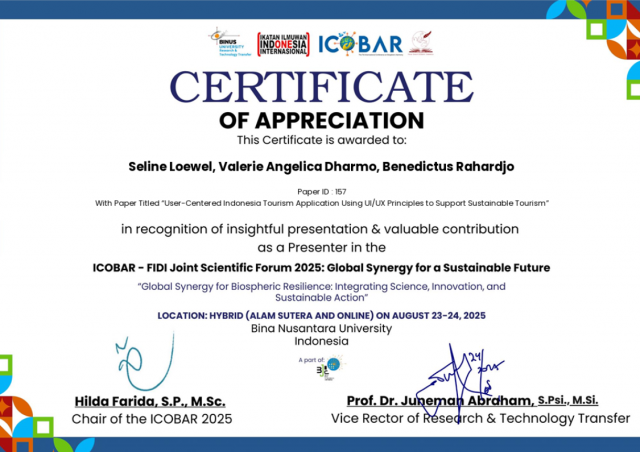
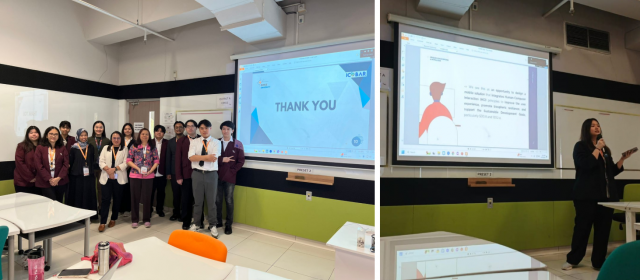
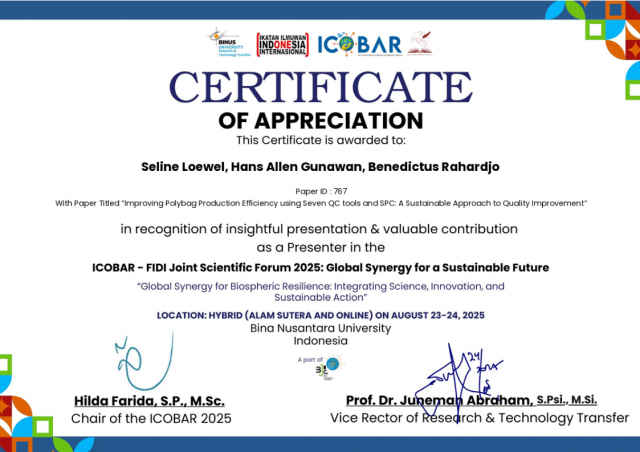
In addition, Seline presented another paper entitled “Improving Polybag Production Efficiency Using Seven QC Tools and SPC: A Sustainable Approach to Quality Improvement.” The research demonstrated how quality management techniques can be applied to enhance operational efficiency while contributing to more sustainable manufacturing practices. Through the presentation sessions and discussions with participants, we gained valuable insights and feedback that helped broaden our understanding of how research can create practical impact.
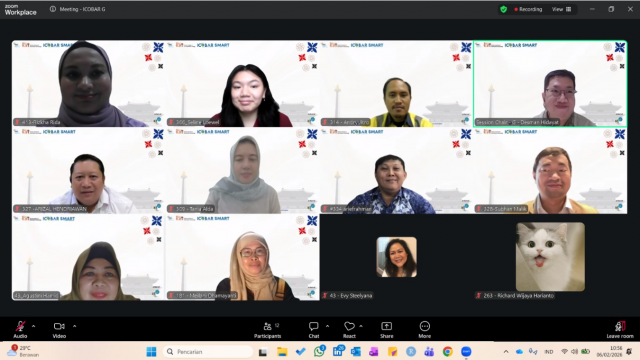
The academic journey continued at ICOBAR 2026, held on February 5–6, 2026, where Seline successfully presented two research papers. The first, “Lightweight Discrete-Event Simulation Model for Decision Support in Small- and Medium-Sized Enterprise Polybag Systems,” explored the use of simulation modeling to support operational decision-making in SMEs. The second paper, “Layout Optimization Using Discrete-Event Simulation and Genetic Algorithm for Sustainable Business,” investigated how advanced analytical techniques can improve facility layouts and business performance while supporting sustainability objectives.
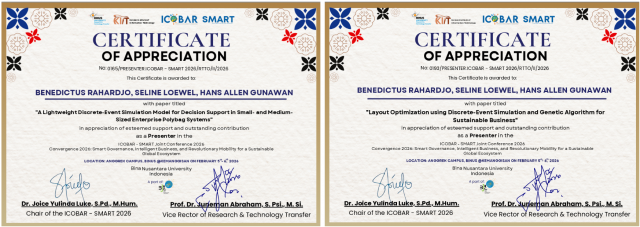
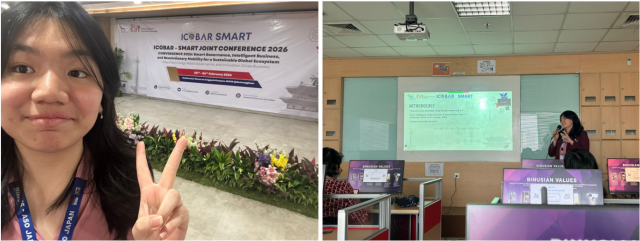
ICOBAR was particularly memorable as it gives us the opportunity to engage with researchers from various fields. The conference showed how technology, business, education, and environmental sustainability can intersect to solve complex real-world problems. These interactions not only expanded our academic perspectives but also inspired new ideas for future research and collaboration.
This experience reminded us of the importance of interdisciplinary research and continuous learning. We got tons of valuable feedback and gained new insights from other researchers to help us grow personally and academically. Most importantly, the conferences showed how research can lead to solutions that promote sustainability and biospheric harmony.

Comments :