

NeoHand: An Adaptive Prosthetic Hand for Community Empowerment
Latar Belakang Sosial-Ekonomi
Kehilangan fungsi tangan membawa dampak yang jauh lebih besar daripada sekadar kehilangan anggota tubuh secara fisik, karena kondisi ini secara langsung menurunkan kemandirian, produktivitas, serta membatasi akses terhadap pekerjaan dan partisipasi sosial. Permasalahan ini sejatinya bersifat fungsional, sosial, dan ekonomi, bukan sekadar isu medis semata. Berdasarkan publikasi Potret Penyandang Disabilitas di Indonesia oleh BPS, total prevalensi disabilitas tingkat berat (tipe 3) secara nasional mencapai 1,43%, sementara disabilitas tipe 1 berada di angka 6,42%. Di dalam kelompok disabilitas fisik dan motorik tersebut, terdapat lebih dari 2,9 juta orang yang mengalami berbagai tingkat kesulitan fungsi tangan (mencapai 1,17% dari penduduk usia 5 tahun ke atas), di mana sekitar 757 ribu orang (0,30%) di antaranya menghadapi kesulitan berat, bahkan lebih dari 245 ribu orang sama sekali tidak bisa menggunakan jari dan tangannya. Keterbatasan fungsional ini berkontribusi langsung pada tingginya kerentanan ekonomi mereka di pasar kerja, yang dikonfirmasi oleh temuan bahwa hanya 21,65% penyandang disabilitas tingkat berat berumur 15 tahun ke atas yang berstatus bekerja, dan 69,14% di antaranya terpaksa terserap di sektor informal akibat minimnya fasilitas serta alat bantu yang inklusif. Oleh karena itu, inovasi dan pengembangan tangan prostetik yang terjangkau menjadi jembatan krusial untuk mengembalikan fungsi gerak, membuka akses ke pekerjaan formal, serta mengangkat kesejahteraan ekonomi para penyandang disabilitas.
Socio-Economic Background
The loss of hand function carries an impact that goes far beyond the physical loss of a limb, as it directly diminishes independence and productivity while restricting access to employment and social participation. This issue is inherently functional, social, and economic, rather than merely a medical concern. According to the publication Portrait of Persons with Disabilities in Indonesia by BPS (Statistics Indonesia), the total national prevalence of severe disability (Type 3) reaches 1.43%, while Type 1 disability stands at 6.42%. Within this physical and motor disability group, over 2.9 million people experience varying degrees of difficulty with hand function (reaching 1.17% of the population aged 5 and above), with approximately 757 thousand people (0.30%) facing severe difficulty, and more than 245 thousand people unable to use their fingers and hands at all. This functional limitation directly contributes to their high economic vulnerability in the labor market, confirmed by findings that only 21.65% of persons with severe disabilities aged 15 and above are employed, 69.14% of whom are forced into the informal sector due to a lack of inclusive facilities and assistive devices. Therefore, the innovation and development of affordable prosthetic hands serve as a crucial bridge to restore motor function, open access to formal employment, and elevate the economic well-being of persons with disabilities.
Inisiasi Riset Akademis dan Hibah DIKTI
Menjawab urgensi sosial tersebut, langkah nyata mulai digerakkan dari lingkungan akademis. Melalui perannya sebagai dosen di BINUS ASO School of Engineering, Yosica Mariana bersama dengan tim dosen mulai menginisiasi riset pengembangan prosthetic hand sejak tahun 2025. Dalam perjalanannya, ia merangkul para mahasiswanya untuk bersama-sama merancang teknologi alat bantu gerak yang tidak hanya fungsional, tetapi juga terjangkau bagi masyarakat luas. Kegigihan ini akhirnya berbuah manis setelah berhasil memperoleh hibah pendanaan riset dari DIKTI. Dukungan finansial ini menjadi katalisator penting yang membuat pengembangan riset prosthetic hand berjalan semakin optimal, terarah, dan komprehensif bersama tim dosen dan mahasiswa.
Academic Research Initiation and the DIKTI Grant
In response to this pressing social challenge, meaningful action began to take shape within academia. As a lecturer at BINUS ASO School of Engineering, Yosica Mariana, together with a team of fellow faculty members, initiated research into prosthetic hand development in 2025. Along the way, she brought her students on board to collaboratively design assistive mobility technology that is not only functional, but also accessible and affordable for the broader public. Their dedication paid off when the team secured a research grant from the Directorate General of Higher Education (DIKTI). This financial backing served as a vital catalyst, enabling the faculty-student team to advance their prosthetic hand research with greater focus, efficiency, and depth.
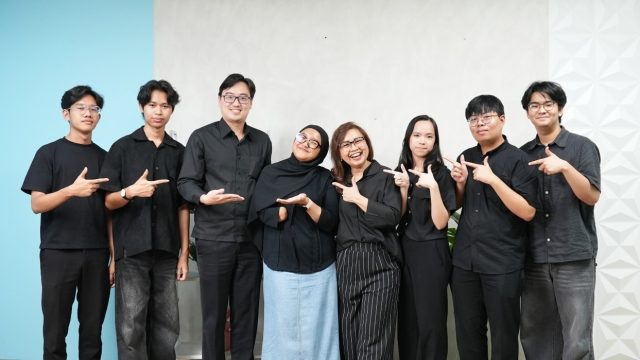 Figure 1. The NEOHAND’s research team (faculty members and students) with Oriza (center)
Pencapaian Akademis dan Terciptanya NeoHand
Dedikasi riset panjang ini terbayar tuntas dengan diterbitkannya publikasi ilmiah di jurnal internasional terindeks MDPI serta berhasil memperoleh Hak Kekayaan Intelektual (HKI). Dari rangkaian panjang iterasi teknologi inilah lahir NeoHand, sebuah inovasi tangan prostetik bionik yang adaptif dan ekonomis.
Academic Milestones and the Birth of NeoHand
Years of dedicated research culminated in a scientific publication in an MDPI-indexed international journal, alongside securing Intellectual Property (IP) rights. Through this extensive process of technological refinement, NeoHand was born—an innovative bionic prosthetic hand designed to be both adaptive and affordable.
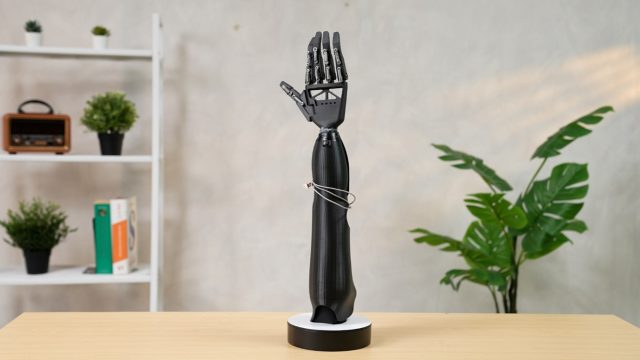 Figure 2: The NeoHand bionic prosthetic hand unit
Kolaborasi Penguji Akhir: Inovasi yang Berpusat pada Manusia
Pengembangan NeoHand tidak berhenti di dalam laboratorium. Untuk memastikan fungsionalitasnya tepat sasaran, tim riset merangkul Oriza sebagai pengguna akhir (end-user). Pendekatan kolaboratif ini memastikan setiap detail teknis disesuaikan dengan kebutuhan nyata pengguna dalam beraktivitas harian.
End-User Collaboration: Human-Centered Innovation
The development of NeoHand didn't stop in the laboratory. To ensure its functionality truly hits the mark, the research team partnered closely with Oriza as their end-user. This collaborative approach ensured that every technical detail was fine-tuned to meet real-world needs in daily life.
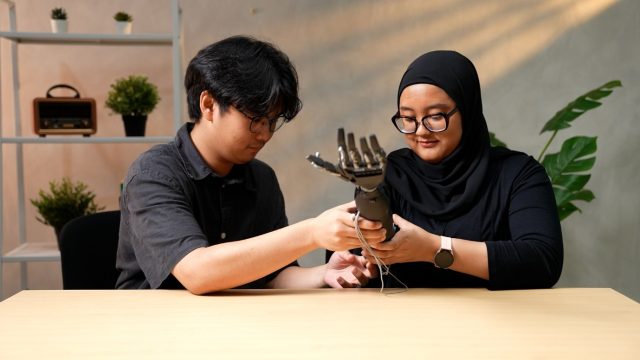 Figure 3: Research team members assisting with the fitting process.
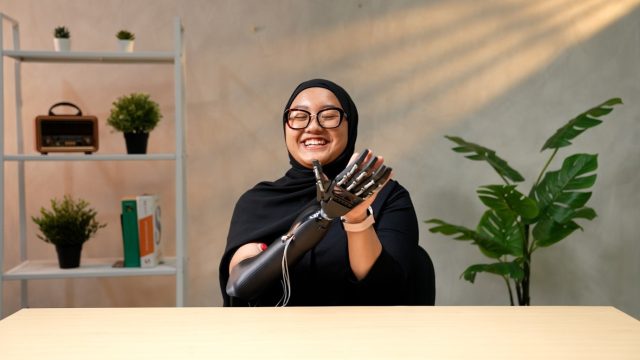 Figure 4: Oriza's joyful smile as she operates NeoHand independently.
Refleksi dan Harapan Masa Depan
Kisah di balik pembuatan NeoHand membuktikan bahwa ketika teknologi dikembangkan dengan empati, batas fisik dapat dilampaui. Kehadiran tangan prostetik terjangkau ini tidak hanya mengembalikan fungsi artikulasi gerak, tetapi juga merawat martabat, kepercayaan diri, dan membuka kembali peluang produktivitas bagi para penyandang disabilitas di Indonesia.
Reflections and Looking Ahead
The story behind NeoHand demonstrates that when technology is crafted with empathy, physical boundaries can be transcended. The arrival of this affordable prosthetic hand does far more than restore motor function—it upholds human dignity, rebuilds confidence, and reopens opportunities for economic productivity among persons with disabilities across Indonesia.
Tautan Referensi & Dokumentasi
- Artikel Resmi BINUS ASO: Adaptive Hand Solutions: When Innovation Meets Humanity
- Publikasi Jurnal Ilmiah: Riset Terbitan MDPI
- Dokumentasi Video Reels Instagram: Reel Uji Coba NeoHand
- Dokumentasi Foto Instagram: Postingan Foto Inovasi NeoHand
NeoHand menjadi bukti konkret bagaimana kolaborasi antara sains, akademisi, pendanaan pemerintah, dan pelibatan langsung pengguna akhir dapat menghasilkan solusi medis yang humanis. Kehadiran teknologi tepat guna ini membuka jalan bagi penyandang disabilitas tangan di Indonesia untuk kembali mandiri, mengejar peluang kerja formal, serta meningkatkan kualitas hidup secara bermartabat.
Reference Links & Documentation
- Official BINUS ASO Article: Adaptive Hand Solutions: When Innovation Meets Humanity
- Scientific Journal Publication: MDPI Research Publication
- Instagram Video Reels Documentation: NeoHand Functional Testing Reel
- Instagram Photo Documentation: NeoHand Innovation Photo Post
NeoHand stands as tangible proof of how collaboration between science, academia, government funding, and direct end-user involvement can yield human-centered medical solutions. The arrival of this appropriate technology paves the way for individuals with hand disabilities in Indonesia to regain independence, pursue formal employment opportunities, and elevate their quality of life with dignity.

Comments :